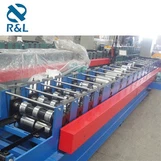
Hey there! As a supplier of Metal Sheet Making Machines, I often get asked a bunch of questions about our products. One question that pops up quite frequently is, "Does a metal sheet making machine have a cooling system?" Well, let's dig into this topic and find out.
First off, let's understand what a metal sheet making machine does. These machines are used to transform flat metal sheets into various shapes and forms. They're super handy in industries like construction, automotive, and manufacturing. For example, a Silo Roll Forming Machine is used to create the curved sheets needed for building silos. And a Metal Roofing Roll Former is essential for making the corrugated sheets used in roofing.
Now, back to the cooling system question. The answer is, it depends. Some metal sheet making machines do have cooling systems, while others don't. It all boils down to the type of machine, the materials it processes, and the manufacturing process involved.
Let's start with the machines that do have cooling systems. In many cases, these are the high - performance and high - precision machines. When a machine is working at high speeds, it generates a lot of heat. This heat can come from various sources, such as the friction between the metal sheet and the machine's rollers, or the heat produced by the electrical components.
For instance, in a Cold Roll Forming Machinery, although it's called "cold" roll forming, there's still heat generated during the process. Cold roll forming involves shaping metal sheets at room temperature by passing them through a series of rollers. The continuous bending and shaping of the metal create friction, which in turn generates heat. If this heat isn't managed properly, it can cause several problems.
One of the main issues is thermal expansion. When the machine parts heat up, they expand. This can lead to dimensional inaccuracies in the formed metal sheets. The sheets might come out slightly larger or misshapen, which is a big no - no in industries where precision is key. A cooling system helps to keep the machine parts at a stable temperature, preventing thermal expansion and ensuring that the formed sheets meet the required specifications.
Another problem caused by excessive heat is wear and tear. High temperatures can accelerate the wear of the machine's components, especially the rollers. The rollers are in direct contact with the metal sheets, and if they get too hot, the surface can become damaged more quickly. This not only shortens the lifespan of the rollers but also affects the quality of the formed sheets. A cooling system helps to reduce the temperature of the rollers, thus extending their lifespan and maintaining the quality of the production.
There are different types of cooling systems used in metal sheet making machines. One common type is the water - based cooling system. Water is a great coolant because it has a high specific heat capacity, which means it can absorb a lot of heat without a significant increase in temperature. In a water - based cooling system, water is circulated through channels in the machine parts that generate the most heat, such as the rollers or the motor. The heated water is then pumped to a radiator or a cooling tower, where it releases the heat into the environment before being recirculated.

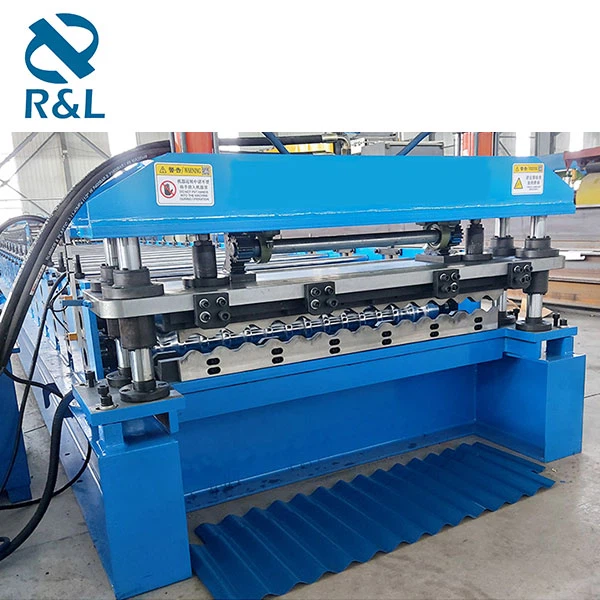
Another type is the air - based cooling system. This system uses fans to blow air over the hot components of the machine. The moving air carries away the heat, cooling down the parts. Air - based cooling systems are relatively simple and cost - effective, but they might not be as efficient as water - based systems, especially in high - heat applications.
On the other hand, there are metal sheet making machines that don't require a cooling system. These are usually the smaller, less powerful machines or those used for less demanding applications. For example, a simple hand - operated or low - speed machine that processes thin and soft metals might not generate enough heat to warrant a cooling system. In these cases, the heat can dissipate naturally into the surrounding environment without causing any significant problems.
So, how do you know if a metal sheet making machine needs a cooling system? Well, it's important to consider the following factors. First, look at the speed of the machine. The faster the machine operates, the more heat it's likely to generate. Second, consider the type of metal being processed. Harder and thicker metals generally require more force to shape, which means more friction and more heat. Third, think about the precision requirements of the final product. If high precision is needed, a cooling system is probably a must.
As a supplier, we always take these factors into account when recommending a machine to our customers. We want to make sure that they get a machine that meets their specific needs and can produce high - quality products efficiently. If a customer is planning to use the machine for high - speed production of thick metal sheets with tight tolerances, we'll definitely recommend a machine with a cooling system.
If you're in the market for a metal sheet making machine, whether it's a Silo Roll Forming Machine, a Metal Roofing Roll Former, or a Cold Roll Forming Machinery, don't hesitate to reach out to us. We have a wide range of machines to choose from, and our team of experts can help you select the right one for your business. Whether you need a machine with a cooling system or not, we've got you covered. Contact us today to start the procurement discussion and take your metal sheet production to the next level!
References
- Metal Forming Handbook: A Guide to Cold and Hot Forming Processes
- Industrial Machinery and Equipment: Principles and Applications