

Hey there! As a supplier of roll forming machines, I'm super stoked to dive into how a servo - driven roll forming machine works. It's a pretty cool piece of tech, and I'm gonna break it down for you in a way that's easy to understand.
First off, let's talk about what a roll forming machine is in general. A roll forming machine is used to transform flat metal sheets into specific shapes by passing them through a series of rollers. These rollers gradually bend the metal into the desired profile. Now, a servo - driven roll forming machine takes this process to the next level with the help of servo motors.
The Basics of Servo Motors
Servo motors are at the heart of a servo - driven roll forming machine. They're different from regular motors because they can precisely control position, speed, and torque. This precision is crucial in roll forming, where even a small error in the bending process can lead to a faulty product.
Think of a servo motor like a really smart and accurate muscle. It gets instructions from a controller, and then it moves exactly as needed. In a roll forming machine, these motors are used to drive the rollers, adjust the speed of the production line, and even control the cutting mechanism.
The Roll Forming Process
Let's walk through the step - by - step process of how a servo - driven roll forming machine works.
1. Material Loading
The first step is to load the flat metal sheet, usually in the form of a coil, onto the machine. The coil is placed on an uncoiler, which unwinds the metal sheet at a controlled speed. The servo motor in the uncoiler ensures that the sheet is fed into the machine smoothly and at the right tension. This is important because if the tension is too high or too low, it can cause the metal to wrinkle or deform during the forming process.
2. Feeding the Sheet
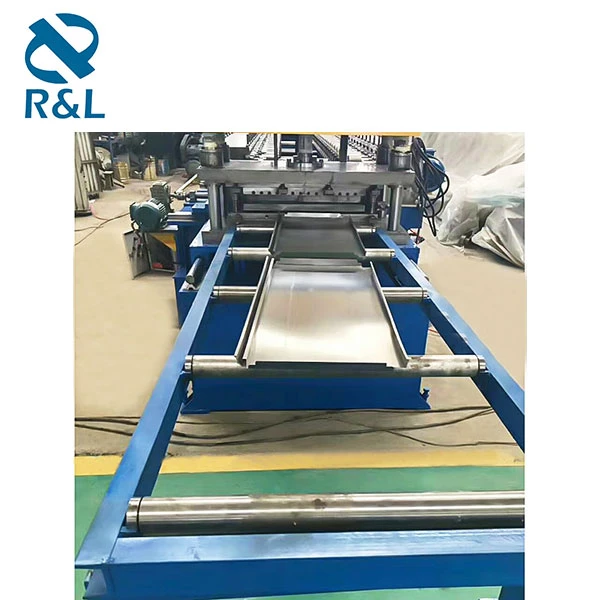
Once the sheet is unwound, it's fed into the roll forming section of the machine. Here, a series of servo - driven rollers start to work their magic. The rollers are arranged in a specific pattern, and as the metal sheet passes through them, it gradually takes on the desired shape. Each set of rollers makes a small bend in the metal, and by the time the sheet reaches the end of the roller train, it has the final profile.
The servo motors that drive the rollers are programmed to rotate at a specific speed and angle. This programming is based on the design of the final product. For example, if you're making a Purlin Forming Machine, the rollers will be set up to create the unique shape of a purlin.
3. Cutting the Profile
After the metal sheet has been formed into the desired shape, it needs to be cut into individual pieces. This is where another servo - driven component comes in: the cutting mechanism. The servo motor in the cutting system precisely controls the timing and force of the cut. It can cut the formed profile at a specific length, which is determined by the production requirements.
For instance, if you're making roofing panels with a Roof Sheet Making Machine, the cutting mechanism will cut the formed sheets into the correct lengths for installation.
4. Stacking or Packaging
Once the pieces are cut, they can be stacked or packaged for shipping. Some servo - driven roll forming machines even have automated stacking systems. These systems use servo motors to move the formed pieces to a stacking area and arrange them neatly.
Advantages of Servo - Driven Roll Forming Machines
There are several reasons why servo - driven roll forming machines are so popular in the industry.

Precision
As I mentioned earlier, servo motors offer high precision. This means that the formed products have consistent dimensions and quality. In industries where accuracy is crucial, like the construction industry when using Steel Silo Roll Forming Machine, this precision is a game - changer.
Flexibility
Servo - driven machines are highly flexible. They can be easily reprogrammed to produce different profiles. All you need to do is change the settings on the controller, and the machine can start making a new product. This is great for manufacturers who need to produce a variety of products.
Efficiency
These machines are also very efficient. The servo motors can adjust the speed of the production line based on the requirements. They can speed up when there's a high demand for products and slow down when there are quality control issues. This helps to optimize the production process and reduce waste.
Maintenance and Troubleshooting
Like any piece of machinery, servo - driven roll forming machines require regular maintenance. The servo motors need to be checked for proper lubrication, and the controllers need to be updated with the latest software. It's also important to keep the rollers clean and free of debris.
If there are any issues with the machine, the servo - driven system usually has built - in diagnostic tools. These tools can help you identify the problem quickly, whether it's a malfunctioning motor or a programming error.
Conclusion
So, there you have it! That's how a servo - driven roll forming machine works. It's an amazing piece of technology that combines precision, flexibility, and efficiency to produce high - quality metal products.
If you're in the market for a roll forming machine, whether it's a Purlin Forming Machine, a Steel Silo Roll Forming Machine, or a Roof Sheet Making Machine, I'd love to chat with you. We've got a wide range of machines to suit different needs and budgets. Just reach out, and we can start discussing your requirements.
References
- "Roll Forming Technology Handbook"
- Industry reports on servo - driven machinery in metalworking


