

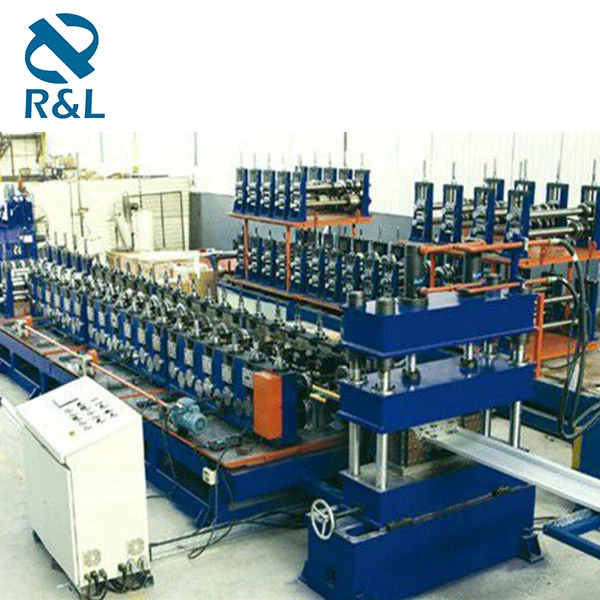
As a supplier of Cold Roll Formers, I've witnessed firsthand the transformative power of this technology in various industries. Cold roll formers are machines that shape metal sheets into desired profiles through a series of rolling operations at room temperature. They are widely used in the production of construction materials, automotive parts, and many other metal products. However, like any industrial process, the use of cold roll formers has environmental implications that we need to understand and address.
Energy Consumption
One of the primary environmental impacts of using a cold roll former is energy consumption. These machines typically rely on electric motors to drive the rollers and perform the forming process. The energy required to operate a cold roll former depends on several factors, including the size of the machine, the speed of operation, and the complexity of the profile being formed.
In general, larger and more complex cold roll formers consume more energy than smaller, simpler ones. For example, a high - speed cold roll former used in large - scale production facilities may require a significant amount of electricity to maintain its continuous operation. This high energy consumption contributes to the overall carbon footprint of the manufacturing process, as most electricity is still generated from fossil fuels in many parts of the world.
However, advancements in technology have led to the development of more energy - efficient cold roll formers. Modern machines are designed with features such as variable frequency drives (VFDs) that can adjust the motor speed according to the actual production requirements. This helps to reduce energy waste by ensuring that the machine only uses as much power as needed. Additionally, some cold roll formers are equipped with energy - recovery systems that can capture and reuse the energy generated during the forming process, further improving their energy efficiency.
Material Waste
Another environmental concern associated with cold roll forming is material waste. During the forming process, some amount of metal may be trimmed or scraped off to achieve the desired profile. This waste material can accumulate over time, especially in high - volume production environments.
The amount of material waste depends on the design of the profile and the precision of the cold roll former. Complex profiles with sharp bends or irregular shapes may generate more waste compared to simple, straight profiles. Moreover, if the cold roll former is not properly calibrated or maintained, it can lead to inaccurate forming, resulting in more scrap material.
To minimize material waste, it is essential to optimize the design of the profiles. By using computer - aided design (CAD) software, engineers can create profiles that require less material while still meeting the functional requirements. Additionally, regular maintenance and calibration of the cold roll former can ensure that it operates at its highest level of precision, reducing the amount of scrap generated. Recycling the scrap metal is also a viable option, as it can be melted down and reused in the production of new metal products, thereby conserving natural resources.

Air and Water Pollution
Cold roll forming processes can also contribute to air and water pollution. In some cases, lubricants and coolants are used during the forming process to reduce friction and prevent overheating of the rollers and the metal sheets. These lubricants and coolants may contain chemicals that can be harmful to the environment if not properly managed.
If the lubricants and coolants are not disposed of correctly, they can contaminate water sources. For example, if they are dumped into rivers or lakes, they can disrupt the aquatic ecosystem by reducing oxygen levels and introducing toxic substances. Moreover, during the operation of the cold roll former, fine metal particles may be generated and released into the air. These particles can pose a health risk to workers if inhaled and can also contribute to air pollution.
To address these issues, it is important to use environmentally friendly lubricants and coolants. Many manufacturers now offer biodegradable and non - toxic alternatives that can reduce the environmental impact. Additionally, proper ventilation systems should be installed in the production facility to capture and filter the metal particles, preventing them from being released into the air. Waste lubricants and coolants should be collected and recycled or disposed of in accordance with environmental regulations.
Noise Pollution
Cold roll formers can generate significant noise during operation. The noise is mainly caused by the mechanical movement of the rollers, the impact of the metal sheets, and the vibration of the machine. Prolonged exposure to high - level noise can cause hearing loss and other health problems for workers in the production facility.
Moreover, noise pollution can also have an impact on the surrounding environment. If the production facility is located near residential areas, the noise from the cold roll former can be a nuisance to the local community.
To reduce noise pollution, noise - reducing measures can be implemented. For example, the cold roll former can be enclosed in a sound - proof cabinet or room. Additionally, vibration - damping materials can be used to reduce the vibration of the machine, which in turn reduces the noise level. Workers should also be provided with appropriate hearing protection equipment to safeguard their health.
Positive Environmental Aspects
Despite the environmental challenges associated with cold roll forming, there are also some positive environmental aspects. Cold roll forming is a relatively efficient manufacturing process compared to other metal - shaping methods such as forging or casting. It requires less energy and generates less waste in many cases.
Cold - rolled products are often used in the construction industry, where they can contribute to the energy efficiency of buildings. For example, cold - rolled steel purlins are lightweight and strong, which can reduce the overall weight of the building structure. This, in turn, can lead to lower energy consumption during the construction process and over the lifetime of the building.
Conclusion
In conclusion, the use of cold roll formers has both positive and negative environmental impacts. While they contribute to energy consumption, material waste, air and water pollution, and noise pollution, there are also ways to mitigate these effects. As a supplier of cold roll formers, we are committed to promoting the use of more sustainable technologies and practices.
We offer a range of Steel Barrel Making Machine, Purlin Forming Machine, and Rolling Shutter Roll Forming Machine that are designed with energy - efficiency and environmental friendliness in mind. Our machines are equipped with the latest technologies to reduce energy consumption, minimize material waste, and comply with environmental regulations.
If you are interested in learning more about our cold roll formers and how they can help you reduce your environmental impact while improving your production efficiency, we invite you to contact us for a detailed discussion. We look forward to working with you to achieve sustainable manufacturing goals.
References
- Smith, J. (2018). "Energy - efficient manufacturing in the metal - forming industry." Journal of Manufacturing Technology.
- Brown, A. (2019). "Reducing material waste in cold roll forming processes." International Journal of Metal Forming.
- Green, C. (2020). "Environmental impact assessment of industrial metal - shaping processes." Environmental Science Review.


