

As a provider of steel roll forming machines, I've witnessed firsthand the crucial role that roller pressure plays in determining the forming quality of these machines. In this blog post, I'll delve into the effects of roller pressure on the forming quality of a steel roll forming machine, exploring both the positive and negative impacts, and offering insights on how to optimize roller pressure for the best results.
Understanding Roller Pressure in Steel Roll Forming
Roller pressure is a fundamental parameter in the operation of a steel roll forming machine. It refers to the force applied by the rollers on the steel strip as it passes through the machine. This pressure is essential for shaping the steel into the desired profile, whether it's a simple straight shape or a complex curved design.
The roller pressure is typically adjusted based on several factors, including the thickness and type of the steel, the complexity of the profile, and the speed of the machine. Properly calibrated roller pressure ensures that the steel is deformed evenly and accurately, resulting in a high-quality finished product.
Positive Effects of Appropriate Roller Pressure
Uniform Deformation
One of the primary benefits of applying the right roller pressure is uniform deformation of the steel strip. When the pressure is evenly distributed across the width and length of the strip, the steel is bent and shaped consistently, minimizing variations in thickness and shape. This uniformity is crucial for ensuring that the final product meets the required specifications and tolerances.
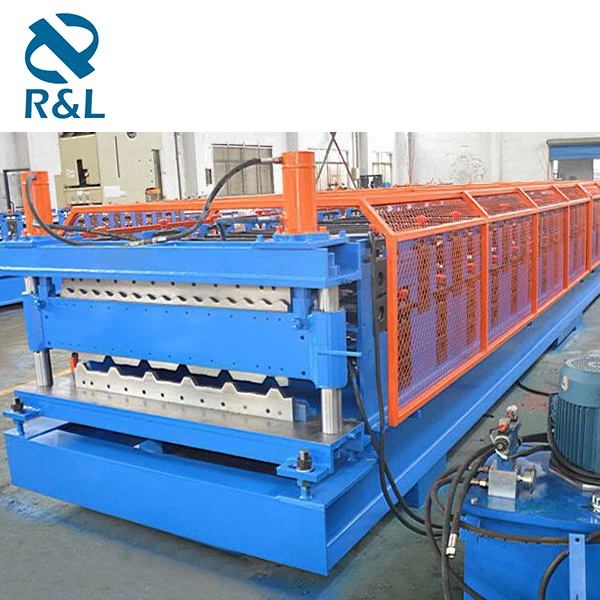
For example, in the production of Roof Sheet Roll Forming Machine, uniform deformation ensures that the roof sheets have a consistent profile, which is essential for proper installation and weather resistance.

Improved Surface Quality
Appropriate roller pressure also contributes to improved surface quality of the formed steel. When the pressure is too low, the steel may not be fully formed, resulting in a rough or uneven surface. On the other hand, excessive pressure can cause surface damage, such as scratches, dents, or cracks.
By applying the optimal roller pressure, the steel is formed smoothly and precisely, leaving a clean and smooth surface finish. This not only enhances the aesthetic appeal of the product but also improves its corrosion resistance and durability.
Enhanced Dimensional Accuracy
Another significant advantage of proper roller pressure is enhanced dimensional accuracy. The pressure helps to control the width, height, and angle of the formed profile, ensuring that it matches the design specifications. This is particularly important in applications where precise dimensions are critical, such as in the construction of industrial buildings or automotive components.
In the case of Double Layer Roll Forming Machine, accurate dimensional control is essential for ensuring that the two layers of steel are aligned correctly and that the final product has the required strength and stability.
Negative Effects of Inappropriate Roller Pressure
Under - Forming
Insufficient roller pressure can lead to under - forming, where the steel strip does not reach the desired shape or dimensions. This can result in a product that is weak, unstable, and does not meet the design requirements. Under - formed profiles may also have poor interlocking properties, which can affect the overall performance of the structure.
For instance, in the production of Corrugated Forming Machine, under - forming can cause the corrugations to be too shallow, reducing the strength and water - shedding ability of the roof sheets.
Over - Forming
Conversely, excessive roller pressure can cause over - forming, which involves deforming the steel beyond the intended shape. Over - forming can lead to several problems, including material cracking, increased internal stress, and reduced ductility. These issues can compromise the integrity and durability of the final product, making it more prone to failure under load.
In addition, over - forming can also increase the wear and tear on the rollers, reducing their lifespan and increasing maintenance costs.
Uneven Deformation
Incorrect roller pressure distribution can result in uneven deformation of the steel strip. This can cause variations in thickness, shape, and surface quality across the width and length of the profile. Unevenly formed products may not fit together properly during assembly, leading to installation difficulties and potential structural problems.
Optimizing Roller Pressure for Best Results
Material Analysis
Before setting the roller pressure, it's essential to conduct a thorough analysis of the steel material. Different types of steel have different mechanical properties, such as yield strength, tensile strength, and ductility. Understanding these properties will help determine the appropriate pressure range for forming the steel without causing damage.
Profile Complexity
The complexity of the profile also plays a crucial role in determining the roller pressure. More complex profiles require higher pressure to achieve the desired shape, but care must be taken to avoid over - forming. It's often necessary to use a series of rollers with different shapes and pressures to gradually form the steel into the final profile.
Machine Speed
The speed of the roll forming machine can affect the roller pressure requirements. At higher speeds, the steel may require more pressure to ensure proper deformation. However, increasing the speed also increases the risk of over - forming and surface damage. Therefore, it's important to find the right balance between speed and pressure to achieve optimal forming quality.
Regular Monitoring and Adjustment
Roller pressure should be regularly monitored and adjusted during the production process. As the rollers wear over time, the pressure may need to be increased to maintain consistent forming quality. Additionally, changes in the steel material or profile design may also require adjustments to the roller pressure.
Conclusion
In conclusion, roller pressure has a profound impact on the forming quality of a steel roll forming machine. Appropriate roller pressure ensures uniform deformation, improved surface quality, and enhanced dimensional accuracy, while inappropriate pressure can lead to under - forming, over - forming, and uneven deformation.
As a steel roll forming machine provider, we understand the importance of optimizing roller pressure to achieve the best results. We offer a range of high - quality roll forming machines, including Double Layer Roll Forming Machine, Corrugated Forming Machine, and Roof Sheet Roll Forming Machine, and provide comprehensive technical support to help our customers achieve optimal forming quality.
If you're interested in learning more about our steel roll forming machines or need assistance in optimizing roller pressure for your specific application, please feel free to contact us for procurement and negotiation. We're committed to providing you with the best solutions and services to meet your roll forming needs.
References
- "Roll Forming Handbook" by the Roll Forming Association.
- "Metals Handbook: Forming and Forging" by ASM International.
- "Advanced Manufacturing Technology" by John A. Schey.


