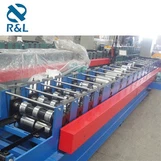
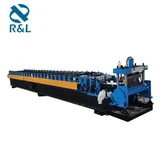
Hey there! As a supplier of Metal Roll Forming Machines, I often get asked about how to adjust the speed of these machines. It's a crucial aspect that can significantly impact the efficiency and quality of your production. So, let's dive right into it and explore the ins and outs of speed adjustment for metal roll forming machines.
First off, why is adjusting the speed important? Well, different projects require different production speeds. If you're working on a small - scale project with intricate details, you'll probably want to slow down the machine to ensure precision. On the other hand, for large - scale, high - volume production, you'd want to crank up the speed to meet the demand.
Understanding the Basics of Speed Control
Most modern metal roll forming machines come with a speed control system. There are generally two main types: manual and automatic.
Manual speed control is pretty straightforward. It usually involves a simple control panel with a dial or a lever. You physically turn the dial or move the lever to increase or decrease the speed. This type of control gives you direct hands - on experience, and it's great for those who like to have full control over the process. For example, if you're just starting out with a new project and you're not sure what the optimal speed is, you can slowly adjust the manual control until you find the sweet spot.
Automatic speed control, on the other hand, is more advanced. It uses sensors and programmable logic controllers (PLCs). These systems can adjust the speed based on pre - set parameters. For instance, if you've set a certain production rate, the machine will automatically maintain that speed. It's ideal for large - scale production where consistency is key.
Factors to Consider Before Adjusting the Speed
Before you start twiddling with the speed controls, there are a few factors you need to keep in mind.
Material Type
Different metals have different properties. For example, aluminum is softer than steel. If you're working with a softer material like aluminum, you can usually run the machine at a higher speed without causing too much wear and tear on the machine or the material itself. However, when working with steel, especially high - strength steel, you may need to slow down the speed to prevent issues like cracking or deformation.
Thickness of the Material
Thicker materials generally require a slower speed. The machine needs more time to form the metal properly. If you try to run the machine too fast with thick material, you might end up with an uneven or poorly formed product. For example, if you're forming a 3 - millimeter thick steel sheet, you'll need to set a slower speed compared to a 1 - millimeter thick sheet.
Complexity of the Profile
If you're creating a simple profile, like a straight corrugated sheet, you can usually run the machine at a relatively high speed. But if you're making a complex profile, such as a custom - designed roof tile, you'll need to slow down. The machine has to make more precise bends and shapes, and a slower speed allows for better accuracy. Check out our Corrugated Sheet Roll Forming Machine and Corrugated Forming Machine for more information on forming different profiles.
Step - by - Step Guide to Adjusting the Speed
Manual Speed Adjustment
- Power On the Machine: Make sure the machine is properly powered on and all safety checks have been completed.
- Locate the Manual Control: Find the speed control dial or lever on the control panel.
- Start at a Low Speed: Begin with a slow speed, especially if you're working with a new material or profile. This allows you to observe how the machine and the material interact.
- Make Small Adjustments: Gradually turn the dial or move the lever to increase or decrease the speed. After each adjustment, let the machine run for a short period to see the results.
- Monitor the Process: Keep an eye on the formed product. Look for any signs of defects, such as uneven bends or cracks. If you notice any issues, adjust the speed accordingly.
Automatic Speed Adjustment
- Access the Control System: Use the touchscreen or control panel to access the machine's automatic speed control system.
- Set the Parameters: Enter the desired production speed, material type, and thickness into the system. You can also input any specific profile requirements.
- Run a Test: Start the machine on a test mode. This allows you to see if the machine is operating at the correct speed and if the product is being formed correctly.
- Fine - Tune if Necessary: If the test run shows any issues, you can go back into the control system and make adjustments to the parameters.
Troubleshooting Speed - Related Issues
Sometimes, you might encounter problems even after adjusting the speed. Here are some common issues and how to fix them.


Uneven Forming
If the formed product has uneven bends or shapes, it could be due to the speed being too high. Slow down the machine and see if the problem persists. It could also be an issue with the rollers or the alignment of the machine. Check the rollers for any damage or misalignment.
Material Jamming
If the material gets jammed in the machine, it might be because the speed is too fast for the material or the profile. Reduce the speed and make sure the material is properly fed into the machine. You may also need to check if there are any obstructions in the feed path.
Excessive Wear on the Machine
If you notice excessive wear on the machine components, such as the rollers or the gears, it could be a sign that the speed is too high. Lower the speed and consider using lubrication to reduce friction.
Conclusion
Adjusting the speed of a metal roll forming machine is a skill that can be mastered with practice. By understanding the different types of speed control, considering the material and profile requirements, and following the step - by - step guide, you can optimize the speed for your specific projects. Whether you're using a manual or automatic system, always monitor the process and be prepared to make adjustments as needed.
If you're in the market for a high - quality metal roll forming machine or need more information on speed adjustment and other features, don't hesitate to reach out. We're here to help you make the most of your production. Check out our Roof Tile Making Machine for more options. Contact us today to start a conversation about your metal roll forming needs!
References
- Metal Forming Handbook: A Practical Guide to Sheet Metal Forming, by John Doe
- Roll Forming Technology: Principles and Applications, by Jane Smith