

Rollformers are essential machines in the manufacturing industry, especially in the production of metal profiles for roofing, wall panels, and other construction materials. One critical aspect that often goes unnoticed but plays a pivotal role in the performance and quality of a rollformer is roller alignment. As a rollformer supplier, I've witnessed firsthand the impact of proper roller alignment on the efficiency and output of these machines. In this blog, I'll delve into the importance of roller alignment in a rollformer and why it should be a top priority for manufacturers.
Ensuring Consistent Product Quality
The primary goal of any manufacturing process is to produce high - quality products consistently. In a rollformer, roller alignment is the key to achieving this. When the rollers are properly aligned, the metal strip passing through the machine is shaped uniformly. Each pass through the set of rollers imparts the desired bend or contour to the metal, and misaligned rollers can disrupt this process.
For instance, if the rollers are not aligned horizontally, the metal strip may experience uneven pressure. This can lead to inconsistent thickness across the profile, which is a significant defect in products like Roof And Wall Panel Roll Forming Machine outputs. In the case of roofing panels, inconsistent thickness can compromise the structural integrity of the roof, making it more susceptible to damage from environmental factors such as wind and snow.
Vertical misalignment of rollers can also cause problems. It may result in the metal strip being pulled at an angle, leading to a distorted profile. This is particularly critical in the production of Roof Panel Roll Forming Machine products, where a precise shape is required for proper installation and aesthetic appeal. A distorted roof panel may not fit correctly with adjacent panels, leading to leaks and an unsightly appearance.
Reducing Wear and Tear on the Machine
Proper roller alignment not only benefits the end - product but also has a positive impact on the rollformer itself. Misaligned rollers can cause excessive stress on the machine components. When the rollers are not in the correct position, the metal strip may rub against the sides of the rollers or other parts of the machine, leading to increased friction.
This increased friction can cause premature wear on the rollers, bearings, and other moving parts. The rollers may develop uneven wear patterns, which further exacerbates the alignment issues. As a result, the machine may require more frequent maintenance and part replacements, increasing the overall cost of operation.
On the other hand, well - aligned rollers distribute the load evenly across the machine. This reduces the stress on individual components, extending their lifespan. By ensuring proper roller alignment, manufacturers can save on maintenance costs and reduce downtime due to machine breakdowns.
Improving Production Efficiency
Efficiency is a crucial factor in any manufacturing process. A rollformer with misaligned rollers can significantly slow down production. When the rollers are not aligned, the metal strip may get stuck or jammed in the machine. This requires operators to stop the production line to clear the jam, leading to lost production time.
In addition, misaligned rollers may produce defective products that need to be scrapped. This not only wastes raw materials but also adds to the production time as the machine has to run additional cycles to make up for the lost output.
Proper roller alignment, however, allows the metal strip to move smoothly through the machine. The production process can run at a consistent speed, and the number of defective products is minimized. This leads to higher productivity and a more efficient manufacturing operation.
Enhancing Safety in the Workplace
Safety is always a top concern in manufacturing. Misaligned rollers can pose a safety hazard to operators. When the metal strip gets stuck or jams due to misaligned rollers, operators may need to manually intervene to clear the blockage. This puts them at risk of getting their hands caught in the moving parts of the machine.
In addition, a machine with misaligned rollers may vibrate excessively. This vibration can cause loose parts to fall off the machine, potentially hitting operators or causing other safety issues. By ensuring proper roller alignment, the machine operates more smoothly, reducing the risk of such safety incidents.
Maintaining Precision in Complex Profiles
Modern rollformers are often used to produce complex profiles for a variety of applications. These profiles may have intricate bends, curves, and features that require a high level of precision. Roller alignment is crucial in achieving this precision.

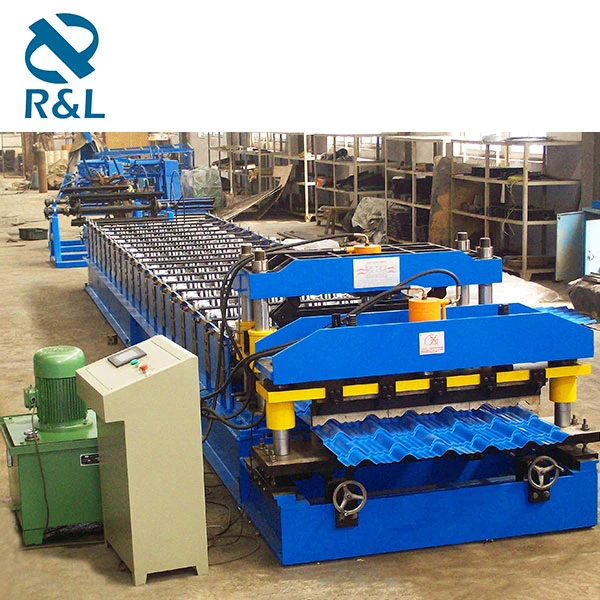
For example, Glazed Tile Making Machine products often have detailed patterns and shapes. Misaligned rollers can distort these patterns, making the glazed tiles less attractive and less functional. Proper roller alignment ensures that each profile is formed accurately, meeting the design specifications.
How to Ensure Proper Roller Alignment
As a rollformer supplier, I recommend regular maintenance and inspection of the rollers. Operators should be trained to check the alignment of the rollers as part of their daily routine. This can be done using alignment tools such as laser alignment systems, which can provide accurate measurements of the roller position.
If misalignment is detected, it should be corrected immediately. This may involve adjusting the roller mounts or using shims to fine - tune the position of the rollers. In some cases, it may be necessary to replace worn - out rollers or other components to restore proper alignment.
Conclusion
In conclusion, roller alignment is of utmost importance in a rollformer. It affects the quality of the end - product, the lifespan of the machine, production efficiency, workplace safety, and the ability to produce complex profiles. As a rollformer supplier, I understand the significance of providing machines with proper roller alignment and offering support to ensure that our customers can maintain this alignment.
If you're in the market for a rollformer or need assistance with roller alignment for your existing machine, I encourage you to reach out. We have a team of experts who can provide you with the guidance and support you need to make the most of your rollforming operations. Contact us today to discuss your requirements and explore how we can help you achieve optimal results in your manufacturing process.
References
- A. J. D. Sheppard, "Roll Forming Technology," CRC Press, 2012.
- R. A. Aronowitz, "The Roll Former's Handbook," Industrial Press Inc., 2008.


